
Meta Ads Guide
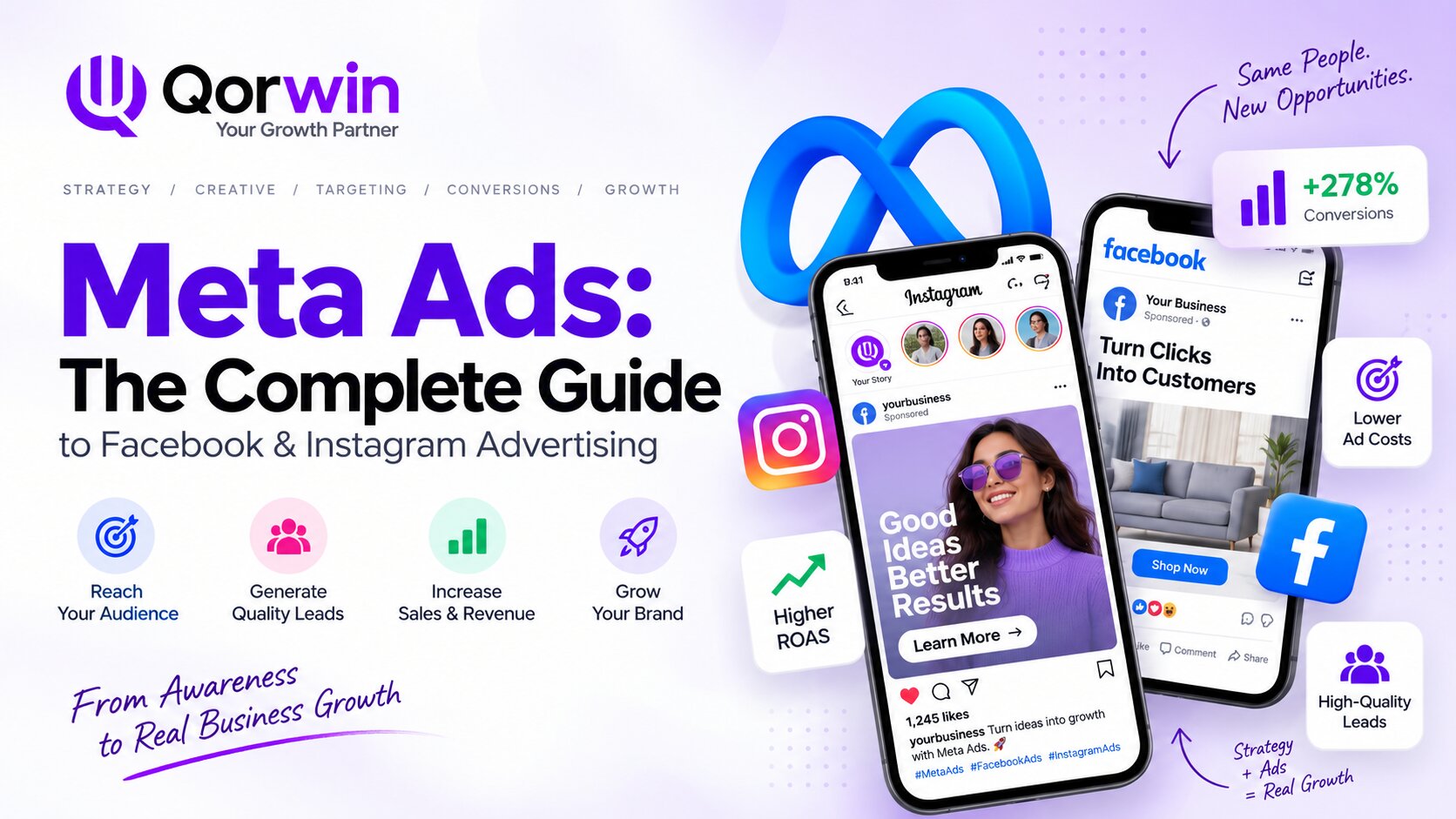
Meta Ads: The Complete Guide to Facebook & Instagram Advertising
Meta Ads can help businesses reach new audiences, generate leads, promote products and reconnect with people who have already shown interest. But successful campaigns require much more than pressing “Publish.” Strategy, targeting, creative, tracking, landing pages and continuous optimisation all work together to determine performance.
Let's Grow Together
Get a Free Meta Ads Consultation
Tell us about your business, audience and advertising goals. Our team can help identify opportunities in your campaign structure, targeting, creative, tracking and conversion journey.
Introduction
What Are Meta Ads?
Meta Ads are paid advertisements delivered through Meta's advertising ecosystem, including Facebook and Instagram. Businesses can use them to promote products, services, offers, content and other actions they want people to take.
The strength of Meta advertising comes from combining audience signals, creative formats, campaign objectives and conversion data. This gives businesses a flexible way to reach people at different stages of the customer journey.
For a service business, that could mean generating enquiries. For an e-commerce brand, it could mean driving purchases. For an established company, it may involve reconnecting with previous website visitors or existing customers.
01 / Campaign Setup
How to Create a Meta Ads Campaign
A strong campaign starts with a clearly defined business outcome. Before opening Ads Manager, decide what the customer should do after seeing the advertisement. This keeps campaign structure, creative and measurement aligned.
Define the Goal
Decide whether the campaign is intended to generate awareness, traffic, leads, engagement or sales.
Build the Ad Set
Configure audience, placements, budget, schedule and the conversion or optimisation event.
Create the Ad
Develop the message, image or video, headline and call to action around the customer's needs.
02 / Campaign Objectives
Choose the Right Meta Ads Objective
Your campaign objective should reflect what you actually want Meta to help you achieve. A campaign optimised for clicks is not necessarily the same as a campaign designed to produce qualified leads or purchases.
Awareness
Useful when the priority is introducing a business, product or message to relevant audiences.
Traffic
Designed to send people to a website, landing page, app or other destination.
Leads
Useful for enquiries through forms, calls, messaging and other lead capture experiences.
Sales
Designed around purchases or other valuable conversion actions for businesses with suitable tracking.
03 / Audience Targeting
Reach the Right People
Audience strategy determines who gets the opportunity to see your advertising. The right approach depends on your market, available first-party data, customer journey and campaign objective.
Broad Audiences
Broad targeting can give the platform more room to find people likely to take the desired action, particularly when useful conversion signals are available.
Interest-Based Audiences
Relevant interests can be useful when you are testing a market or working with a product that has a clear audience profile.
Custom Audiences
Existing website visitors, customer lists and people who have interacted with your business can be valuable audiences for remarketing.
Lookalike Audiences
Lookalike approaches can help advertisers find new prospects with characteristics similar to a selected source audience.
04 / Retargeting
Reconnect With People Who Already Know Your Brand
Many people do not convert during their first interaction. They may browse a service page, view a product, watch a video or start a form and leave before taking action.
Retargeting allows businesses to reconnect with audiences who have already interacted with the brand. The message can be different from the initial prospecting advertisement because the audience already has some familiarity with the business.
Website Visitors
Reconnect with people who visited relevant pages but did not convert.
Content Viewers
Follow up with people who engaged with video or social content.
Cart & Product Visitors
Remind high-intent shoppers about products, offers or useful information.
05 / Measurement
Meta Pixel & Conversions API
Reliable conversion measurement is essential because advertisers need to understand what happens after someone interacts with an ad.
The Meta Pixel can help measure website activity and relevant events. Conversions API provides another method for sending conversion-related signals from a server-side environment or other controlled source.
Before increasing spend, verify that important actions are being measured correctly. Depending on the business, these may include purchases, lead submissions, calls, registrations, demo bookings, add-to-cart actions or completed checkouts.
06 / Budgeting
How Much Should You Spend on Meta Ads?
There is no single Meta Ads budget that works for every business. Budget decisions should be connected to your market, customer economics, conversion rate, sales cycle and capacity to handle new enquiries or orders.
Instead of asking only how much to spend, consider how much your business can sustainably spend to acquire a customer or qualified lead.
| Metric | What It Tells You | Why It Matters |
|---|---|---|
| CPC | Cost associated with clicks | Helps evaluate traffic efficiency, but does not prove profitability. |
| CPL | Cost per lead | Useful for lead generation, especially when combined with lead quality. |
| CPA | Cost per acquisition | Connects advertising spend to a defined acquisition action. |
| ROAS | Revenue generated relative to ad spend | Useful for evaluating revenue efficiency in suitable e-commerce campaigns. |
07 / Creative & Copy
Create Ads That Earn Attention
Creative is one of the most visible parts of a Meta campaign. Even a carefully selected audience may not respond if the message does not communicate a relevant problem, benefit or reason to act.
Images
Use clear visual concepts that communicate the product, service, offer or customer outcome quickly.
Video
Use strong opening moments, demonstrations, testimonials, education or product storytelling.
Carousel
Use multiple cards to explain features, steps, products, benefits or different aspects of an offer.
A Simple Copy Framework
Problem → Solution → Benefit → Action
Start with a customer problem or desire, introduce the solution, explain the benefit clearly and finish with a relevant call to action.
What to Test
- Different hooks and opening lines
- Different offers and value propositions
- Different visual concepts
- Testimonials and social proof
- Different calls to action
- Short-form and long-form copy
08 / Lead Generation
Generate More Than Just Leads—Generate Better Opportunities
Meta Ads can be used for lead generation through instant forms, landing pages, messaging and calls. But lead volume alone is not a sufficient measure of campaign quality.
Businesses should also examine whether leads match their target market and whether those leads move forward in the sales process.
- Cost per lead
- Qualified lead rate
- Cost per qualified lead
- Appointment or booking rate
- Sales conversion rate
- Customer acquisition cost
09 / E-commerce
Meta Ads for E-commerce Businesses
E-commerce campaigns can use Meta Ads throughout the customer journey, from product discovery to purchase and remarketing. Creative can focus on product benefits, demonstrations, customer reviews, bundles, promotions and user-generated-style content.
Prospecting
Introduce products to relevant new audiences using creative designed around customer needs.
Consideration
Give interested users more reasons to evaluate your product, offer and brand.
Retargeting
Reconnect with product viewers, cart visitors and other high-intent audiences.
10 / Optimisation
How to Improve Meta Ads Performance
Meta advertising is an ongoing process. Campaigns should be reviewed using meaningful performance data, then adjusted based on what the data suggests about audiences, creative, conversion paths and business outcomes.
Test
Test meaningful variables such as audience, creative, offer, copy and landing page experience.
Measure
Monitor conversion metrics and business outcomes rather than relying only on impressions or clicks.
Refresh
Introduce new creative and messages when audiences show signs of fatigue or performance declines.
Do Not Ignore the Landing Page
The ad is only the beginning of the conversion journey. If the landing page is slow, confusing, poorly matched to the advertisement or missing a clear call to action, campaign performance can suffer even when the ad itself generates strong engagement.
Common Mistakes
Meta Ads Mistakes That Can Waste Your Budget
Optimising for the Wrong Metric
Clicks, impressions and likes can be useful diagnostics, but they should not replace business-focused KPIs.
Poor Conversion Tracking
If important actions are not measured accurately, campaign decisions become much harder.
Weak Creative
Good targeting cannot compensate indefinitely for advertising that fails to communicate a relevant message.
Overly Narrow Targeting
Excessively restricting audiences can limit delivery and reduce opportunities for the system to find relevant users.
Ignoring Retargeting
People who already interacted with your brand may need a different message before they convert.
Changing Everything at Once
Constantly changing multiple variables makes it difficult to understand what actually improved or hurt performance.
Why Qorwin
Meta Ads Built Around Business Growth
Qorwin approaches paid advertising as part of a wider customer acquisition system. The focus is not simply on launching advertisements, but on connecting audience strategy, creative, landing pages, tracking and optimisation to measurable business outcomes.
Our digital marketing services include Meta Ads, Google Ads, SEO, Local SEO, website development, content marketing, conversion optimisation and AI-focused marketing strategies.
For businesses that need qualified enquiries, our lead generation approach can combine paid advertising with landing pages, content, search visibility and conversion optimisation.
Frequently Asked Questions
Meta Ads FAQs
What are Meta Ads?
Meta Ads are paid advertisements delivered across Meta's advertising ecosystem, including Facebook and Instagram. Businesses use them for objectives such as awareness, traffic, leads and sales.
How much should I spend on Meta Ads?
There is no universal budget. The appropriate amount depends on your market, audience, offer, conversion rate, customer value, sales cycle and ability to handle additional demand.
Are Facebook Ads and Instagram Ads the same?
They are managed through Meta's advertising ecosystem and can be included in the same campaign structure, while the creative experience and audience behaviour can differ between placements.
What is Meta retargeting?
Retargeting is the practice of advertising to people who have already interacted with your business, such as website visitors, content viewers or other relevant audiences.
What is the Meta Pixel?
The Meta Pixel is a website-based tracking technology used to help measure actions and provide conversion signals for Meta advertising.
What is Conversions API?
Conversions API is a way of sending conversion-related events to Meta from a server or other controlled environment, complementing browser-based measurement approaches.
How can I reduce my Meta Ads cost?
Start by identifying the business metric that matters, then evaluate targeting, creative, offer, landing page, conversion tracking and lead quality. Lowering a single surface-level metric is not necessarily the same as improving profitability.
How long does it take for Meta Ads to work?
Timing varies by campaign objective, budget, audience, offer, creative, conversion volume and market. Initial data can appear quickly, while reliable optimisation often requires enough data to identify meaningful patterns.
Ready to Grow?
Turn Meta Ads Into a Smarter Growth Channel
Whether you need more qualified leads, e-commerce sales, retargeting or a complete paid acquisition strategy, Qorwin can help you build a campaign around your business goals.
Request Your Free Meta Ads Consultation →Qorwin Technologies · Meta Ads · Facebook Advertising · Instagram Advertising · Digital Growth